
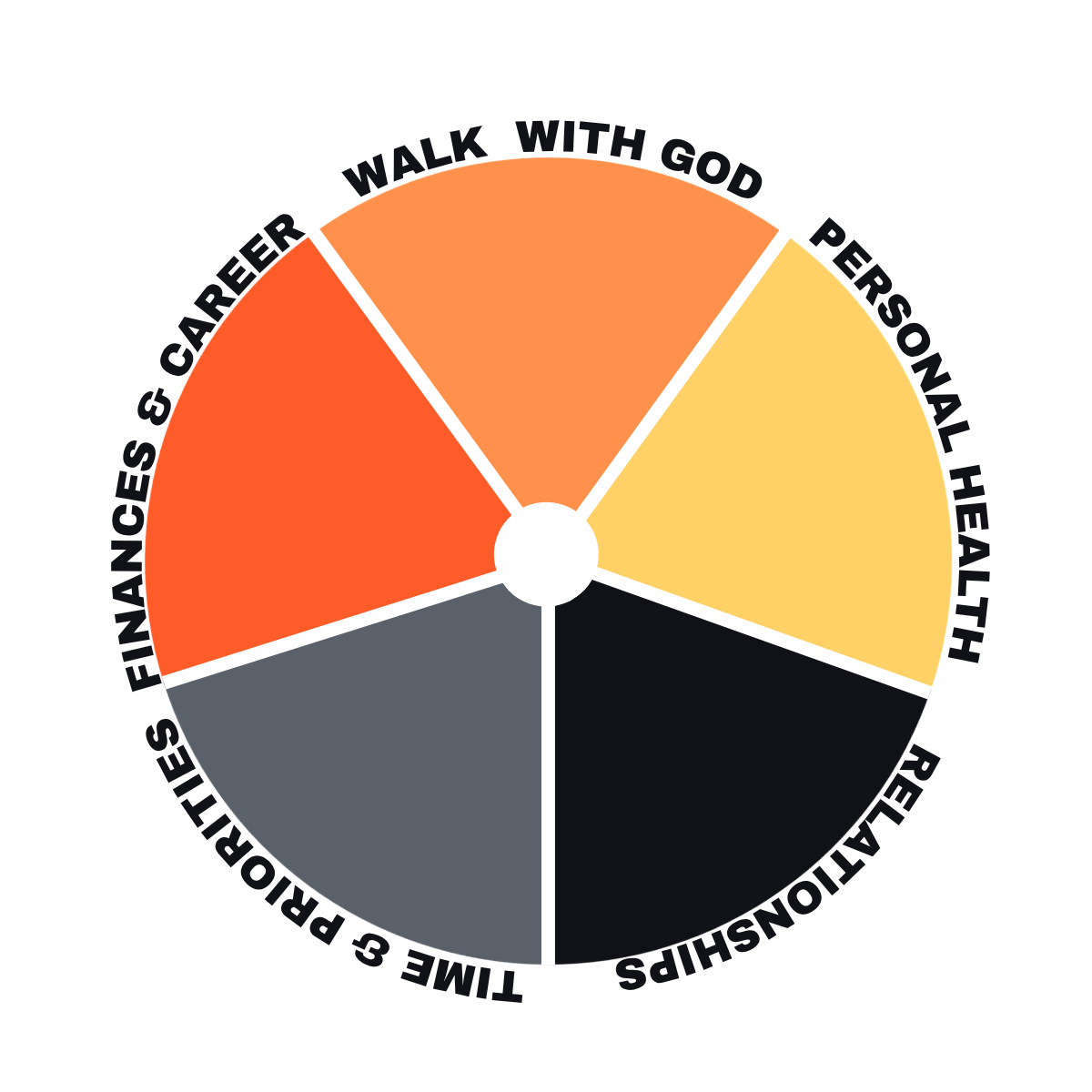
We’ve been in a series called The Mature Man. The idea is simple: maturity doesn’t just happen. It has to be built — and it gets built across every area of a man’s life. We’ve been working through a visual of a wheel — 5 different domains that make up a whole man. This week we are continuing in the personal health section and we’re landing on something that is insanely important to becoming a mature man.
Your body.
How you treat your body affects how you think, how you feel, and how available you are to the people and calling God has put in front of you. Maturity in this area of your life doesn’t mean you’ve figured it all out. I’m getting old enough to know as soon as you think you’ve got it locked in, something changes and causes you to rethink and retool your routines, plans, and expectations.
THE CYCLE MOST OF US ARE STUCK IN
I talk to a lot of men who get really motivated to get in shape for something coming up. A daughter’s wedding. An anniversary trip. A milestone birthday. I get it — I’m turning 40 in August and I’ve got some physical goals I want to hit by the time I get there. That kind of deadline-driven motivation isn’t a bad thing.
But here’s the pattern a lot of us know too well: long stretches of laziness, followed by a jolt of motivation, followed by a crash diet or an intense workout plan or a new trainer. We go hard for six weeks. Then life happens. Then we’re back where we started, waiting for the next deadline to light a fire under us.
I’ve lived that cycle. A few years back I wasn’t in terrible shape by the world’s standards — I just slowly let it go. And when I got honest about why, the problem wasn’t discipline. It was that I was measuring everything by the wrong thing. I was either trying to hit a number on a scale, or I wasn’t trying at all. Neither of those is approaching your physical health from a mature place.
Then I came back from a trip to India recently. My body has just not been right since. Energy completely sapped. Dealt with a bacterial infection I picked up from over there. Getting my motivation back up has been a real fight. Some seasons are just like that — and I say that as someone who has done the work to build a sustainable rhythm. Even with the right framework, the body is still a fight.
Every season looks different. But the call stays the same.
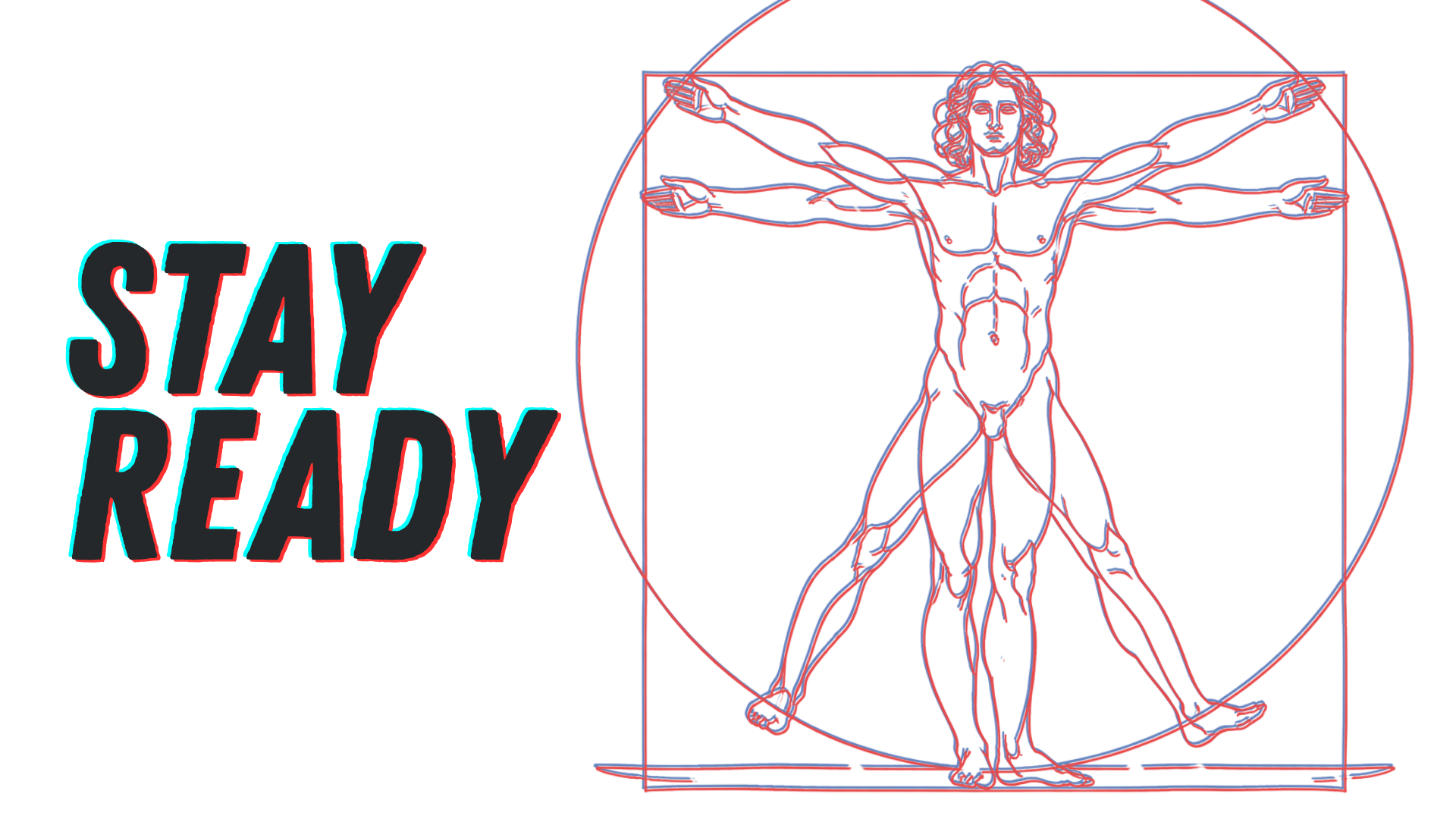
IF YOU STAY READY, YOU DON’T HAVE TO GET READY
There’s a phrase that you’ve probably heard: “If you stay ready, you don’t have to get ready.” I LOVE THAT! It is so true in not only our physical lives but really every area that truly matters.
Most of us live in “get-ready” mode. We wait for a reason to care — a wedding, a health scare, a doctor’s visit that didn’t go well — and then we scramble. But scrambling isn’t stewardship. It’s crisis management.
The men who seem to have this figured out aren’t the ones with the most discipline or the best genetics. They’re the ones who stopped waiting for a reason and started building a rhythm. Not because they love the gym. Because they’ve decided that staying ready is part of how they show up for their life.
Now here’s where it gets interesting — because that raises a question worth asking.
Ready for what?
READY FOR WHATEVER GOD CALLS YOU TO DO
If staying ready is just about looking good at your daughter’s wedding, that’s a fine goal — but it’s a small one. It has an expiration date. The wedding ends. The trip is over. The birthday passes. And without a bigger reason, the motivation dies with it.
Here’s a phrase that I live by as it relates to my physical health: I steward my body well so I can say yes.
Yes to serve. Yes to show up. Yes to stay in the fight. Yes to be present for my family in ways that actually require me to have energy. Yes to carry hard things without breaking. Yes to go wherever God sends me — even if that’s across the world and back again.
To be usable to the King. To my family. To my future.
That’s not the language our culture uses around health. Our culture says the goal is longevity — live as long as you can, avoid risk, preserve at all costs. And that sounds reasonable until you realize most of us don’t want to live longer so we can serve God more. We want to live longer because we are scared to die. But Scripture says, “To live is Christ and to die is gain.” That isn’t a morbid verse, it’s a verse that brings great clarity and context to the brevity of life but also the purpose of it.
Look at Jesus. He walked toward the cross, not away from it. Thank God Jesus was focused on usefulness to the mission instead of longevity! Paul described himself as being poured out like a drink offering. Longevity is never touted as the highest good in the pages of Scripture. Usefulness is.
Luke 2:52 gives us this small, striking line about Jesus as a young man: “And Jesus increased in wisdom and in stature and in favor with God and man.” Wisdom. Physical development. Favor with God and with people. These grew together. They weren’t competing categories. Jesus wasn’t neglecting his body or obsessing over it. He was building the kind of man God could use.
The question we should be asking isn’t, “How long can I keep this body?”
The question should be, “Is the current state of my health making it easier or harder to obey God?”
WHAT PAUL ACTUALLY MEANT
Paul writes in 1 Corinthians 9:27:
“No, I strike a blow to my body and make it my slave so that after I have preached to others, I myself will not be disqualified for the prize.”
He’s writing to a city obsessed with athletic competition. He points at the stadium and says — you already understand training. You already know what it looks like to do hard things in your body for a goal. Now aim that same energy at eternity.
He’s not preaching self-punishment. He’s not talking about hating your body into submission. He’s talking about self-mastery — the idea that your body serves you, not the other way around.
And then in 1 Corinthians 6 he gives us the foundation underneath all of it:
“Do you not know that your body is a temple of the Holy Spirit within you, whom you have from God? You are not your own, for you were bought with a price. So glorify God in your body.”
If that language feels distant, here’s what it means practically: your body is not yours. It was given to you. And the same Spirit that raised Jesus from the dead lives inside it. That changes the question from “what do I want to do with my body?” to “what does God want to do through it?”
Your body isn’t the point. But it carries the point everywhere it goes.
YOUR BODY AND YOUR MIND ARE IN THE SAME FIGHT
This connects directly to what we talked about last week. If you’re in a season where depression or anxiety has been grinding you down, your body is part of the solution — and the research on this is not subtle.
Studies have found that men who get regular vigorous exercise are 25 percent less likely to develop depression or an anxiety disorder. A sweeping review of global research found that exercise consistently reduced symptoms of depression and anxiety across all ages, often matching or even outperforming medication and therapy. One trial found it was as effective as medication in lowering depressive symptoms over 16 weeks.
Regular movement improves sleep, regulates stress hormones, and builds the kind of confidence that comes from doing something hard consistently. Your theology and your body are not two separate conversations. How you think shapes what you do. What you do with your body shapes how you feel. How you feel shapes how you think. It’s a loop — and for a lot of men right now, it’s spinning the wrong direction.
The way out isn’t just prayer. It isn’t just thinking differently. Sometimes the way out starts with actually moving your body.
WHERE DO YOU START?
Most of us are in the neglect camp — and if that’s you, the bar is lower than you think. This isn’t about a perfect program or a complete overhaul. It’s about moving the needle.
Start simple. Walk. Sleep. Drink water. Tell your body “no”. Make one better choice this week than you made last week. The goal isn’t aesthetic. The goal is readiness.
And if you’re on the other end — if your body has become the thing your identity is built on, if the training is relentless and the satisfaction never comes — this is your invitation to reorient. Not to stop. But to ask why.
Both of these are stewardship problems. Both have the same answer: put your body back in its proper place. Not an idol. Not an enemy. A tool in the hands of God.
Stay ready. So when He calls, you can say yes.
REFLECTION QUESTIONS
Are you in a stay-ready rhythm, or are you living in the vicious cycle of short-term motivation? What’s keeping you there?
Is the current state of your physical health making it easier or harder to obey God?
What’s one thing you can change this week — not for the mirror, but for the mission?
If this is something you’d like to change, start with a short prayer like this:
Lord, I don’t want to be the man who’s always scrambling to get ready. I want to be the man who stays ready — because I know You can call at any time. Help me steward this body well. Not for how it looks. Not to prove something. So that when You ask, the answer is a quick “YES!” Amen.
Want more content like this? You can find all of our content and resources here:

The Forge exists to provide deep brotherhood, essential tools, and focused coaching so that every man can run with clarity, live with intention, and fully become the man he was designed to be. That’s the mission behind everything we’re building here. We’re creating a place where men can grow, get sharpened, and take real steps toward becoming the man God called them to be.
If this content hits home for you, share it with another man who needs it. And if you want to help support what we’re building so we can keep creating resources, coaching, and tools for men, you can do that below.
Every share and every ounce of support helps move this mission forward. Thank you!
Contact Gabe: gabe@theforgemen.co